Define the protected zone and traffic patterns
- What needs separation: pedestrians from forklifts, vehicles from staging, or the public from a maintenance footprint?
- Are there peak periods when flows reverse, such as shift changes or class transitions?
- Will emergency or service access need temporary openings?
Industrial sites around the city often require long, linear runs with clear sightlines, while campus-style areas prioritize wayfinding and low-glare barricades near entries.
Surface and site-stability planning conditions
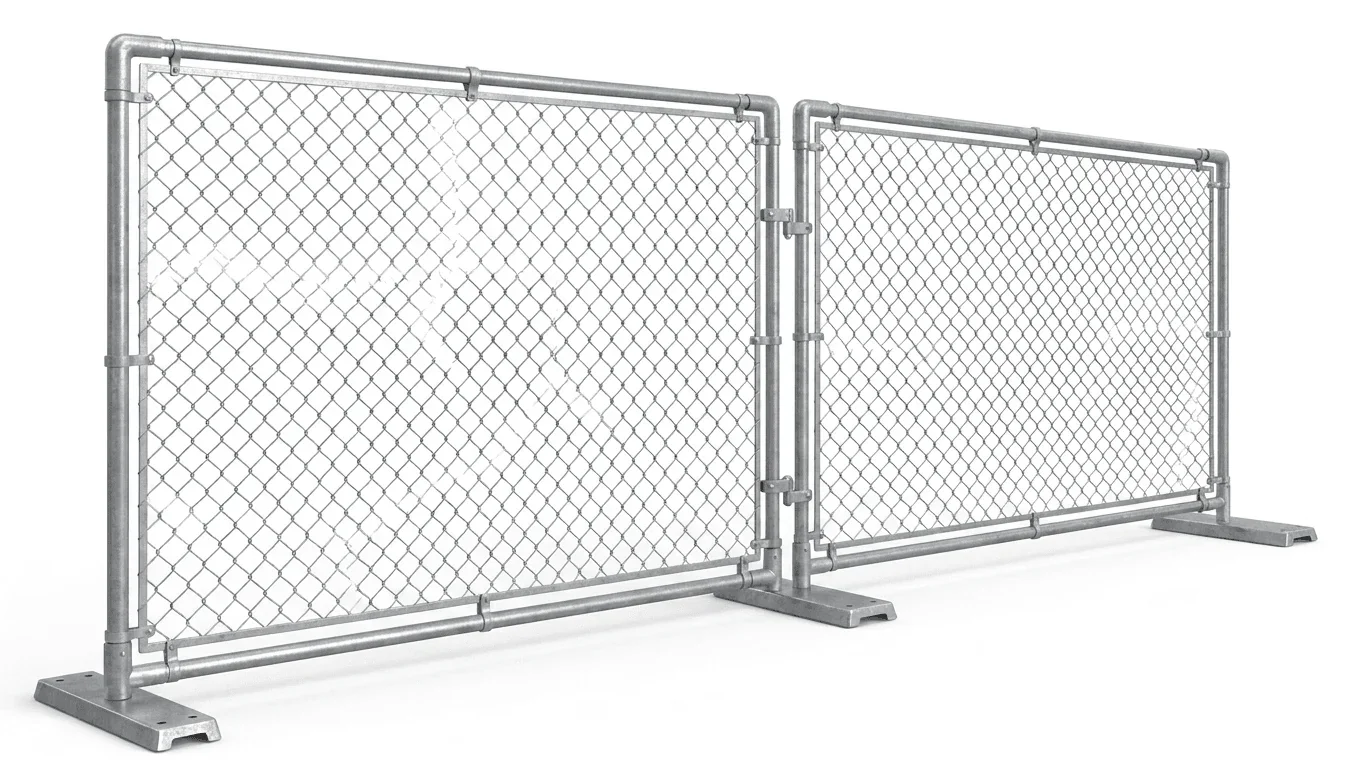
South Bend’s seasonal ground softness and winter plowing change how panels behave. - On thawing soils, freestanding bases need wider footprints or site-stability factors to resist lean. - On pavement, weighted bases avoid drilling and keep panels movable for snow storage. - In snow season, allow offset from curb lines so plows don’t push berms into panels.
Wind exposure and layout breaks
Open lots and corridors between tall buildings create gusts. Break long runs with returns or weighted intervals to reduce sail effect. Keep sight triangles open where vehicles and pedestrians cross.
Access routes and staging
Check the tightest gate, elevator, or hallway if panels or barricades must pass inside. For events or interior maintenance, consider non-marking bases and quiet hardware during early hours.
Coordination with site equipment
- For overhead work zones needing exclusion areas: /aerial-lift-rental/ and /articulating-boom-lift-rental/
- For material movement across barricaded zones: /telehandler-rental/ or /forklift-rental/
Actual conditions, the selected unit’s instructions, and site procedures govern any exterior or elevated work.
Seasonal adjustments
During humid summer stretches, adhesive signage can fail; plan for mechanical attachments. In winter, avoid placements that trap meltwater across pedestrian routes.